Three of Swords and Queen of Swords Meaning in Tarot
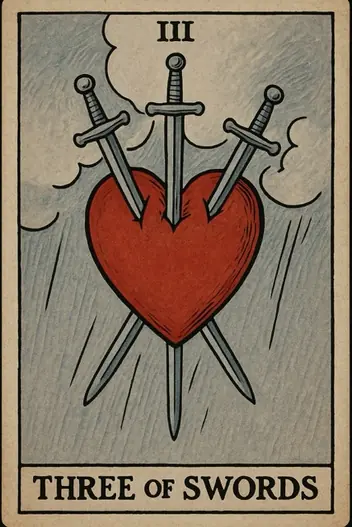

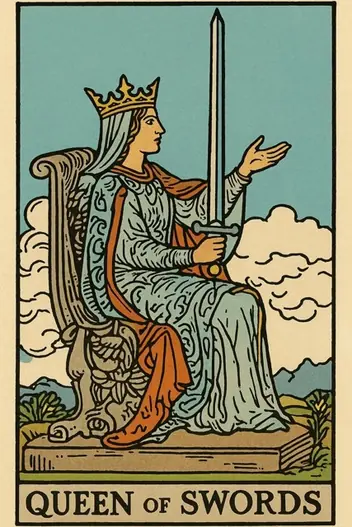
- Arcana
- Three of Swords — Minor Arcana, Swords; Queen of Swords — Minor Arcana, Swords
- Elements
- Three of Swords — Air; Queen of Swords — Air
- Elemental interaction
- Same element — energies intensify each other
- Numerology
- 3 + 13 = 16 → 7
The collision of the Three of Swords and the Queen of Swords is a masterclass in emotional triage. The Three of Swords represents the moment of piercing heartbreak, betrayal, or a painful truth that cannot be ignored. The Queen of Swords, in contrast, is the archetype of the detached observer who sees reality without sentimentality. When these two cards meet, the seeker is forced to move from raw emotional wounding into cold, analytical processing. This is not a time for denial or passive suffering; it is a time for surgical precision in cutting away what is false.
Psychologically, this combination signals the integration of pain into wisdom. The Queen of Swords does not soothe the wound—she dissects it. She demands that you ask: What is the objective data here? What lesson must be learned to prevent this wound from recurring? The result is a period of intense, uncomfortable clarity where emotional vulnerability is set aside in favor of strategic self-preservation. This pairing is less about healing the heart and more about using the mind to build a protective fortress around it.
Three of Swords and Queen of Swords Together: Meaning
The core dynamic here is a shift from passive suffering to active analysis. The Three of Swords initially brings the storm—the shock of infidelity, the end of a relationship, or a harsh professional setback. The Queen of Swords then arrives to command the seeker to stop crying and start thinking. This is not coldness for its own sake; it is a survival mechanism. The Queen’s energy is about establishing boundaries based on hard evidence, not on hope or nostalgia.
In practice, this combination creates a mindset of clinical detachment. You might find yourself replaying conversations and events, not to wallow, but to identify the exact moment the truth was revealed. This is a powerful cognitive tool, but it carries a risk: the seeker may become so focused on logic that they suppress necessary emotional grieving. The key insight here is that the Queen of Swords must be used as a scalpel, not a sledgehammer. She helps you identify the pattern of betrayal so you can avoid it, but she cannot heal the wound itself—that requires time and emotional processing.
The real-world implication is clear: this is a call to make a decision based on facts, not feelings. If a relationship is toxic, the Queen of Swords gives you the courage to leave. If a career path is dead, she provides the data to pivot. The Three of Swords ensures you feel the cost, but the Queen ensures you act on the lesson.
Your pair is already on the table. Ask your question and draw the clarifying card
or simply focus on it
Three of Swords and Queen of Swords: Career and Money
Strategic Opportunities:
Use this energy to audit your professional network for toxic relationships or untrustworthy partners. The Queen of Swords gives you the clarity to cut ties cleanly.
Strategic Opportunities:
Re-evaluate your career trajectory based on hard data. If a project or job is causing chronic stress (the Three of Swords), the Queen helps you calculate the exit strategy.
Calculated Risks:
Avoid making impulsive decisions based on emotional reactions to criticism or failure. The Queen of Swords demands evidence-based planning, not revenge or escape.
In the professional realm, this combination is a powerful indicator for strategic restructuring. The Three of Swords might represent a painful performance review, a failed deal, or a betrayal by a colleague. The Queen of Swords steps in to transform this pain into actionable intelligence. The most important financial warning here is to avoid litigation or confrontation without a clear plan. The Queen is a master strategist, but she is not impulsive. Use this time to gather documentation, build a case, and consult with experts (lawyers, mentors, financial advisors) before making any moves.
Bold strategic tip:
If you are considering leaving a job, create a detailed exit plan with clear timelines and financial buffers. The Three of Swords may push you to walk out immediately, but the Queen insists you wait until the numbers make sense. Do not burn bridges unless you have a new one already built.
Three of Swords and Queen of Swords as Feelings
If you are single:
This combination suggests you are likely evaluating a past heartbreak with newfound clarity. You may feel ready to date again, but only with a strict set of criteria designed to protect you from repeating the same mistakes.
If you are in a relationship:
This pairing points to a communication crisis where one partner is being brutally honest, or where a painful truth has been uncovered. The dynamic is about power and truth-telling, not affection.
In relationships, the Three of Swords and Queen of Swords create a high-stakes environment for emotional honesty. The Queen’s energy demands that both partners speak their truth, even if it hurts. This can lead to a necessary breakup or a radical restructuring of the relationship’s foundations. The key advice here is to prioritize clarity over comfort. If you are the one feeling wounded, ask yourself: Is this relationship built on a lie? If you are the one delivering the truth, ensure you are doing so with precision, not cruelty.
Bold advice:
If you are in a relationship, do not retreat into silence to avoid conflict. The Queen of Swords requires you to state your boundaries explicitly. The Three of Swords means the cost of staying silent is higher than the cost of speaking. Use "I" statements to own your feelings without blaming, but do not soften the truth to spare feelings. This is a time for radical honesty, not diplomacy.
Get a personalized interpretation
Unlock the combined meaning of your cards in the context of your unique question — for free.
Three of Swords and Queen of Swords Reversed: How to Read It
If the Three of Swords is Reversed:
Acute pain becomes stuck in the subconscious. Instead of shattering illusions, there is a painful clinging to them. The person is blocked in the denial phase. They know the truth (the Queen of Swords upright) but refuse to acknowledge the scale of the catastrophe. The result is prolonged depression, not a crisis. Advice: Find the courage to acknowledge the wound, otherwise it will fester for years.
If the Queen of Swords is Reversed:
Rationality turns into paranoia and passive aggression. Criticism becomes toxic rather than constructive. Instead of analyzing the situation, there is a search for someone to blame and self-sabotage through excessive suspicion. Warning: You risk destroying what could still be saved, simply out of fear of being vulnerable.
If BOTH are Reversed:
Complete imbalance. Emotional pain with no outlet (Three of Swords reversed) mixes with irrational cruelty (Queen of Swords reversed). This is the state of the "victim-tyrant": the person suffers and blames everyone around them, unwilling to take responsibility. Method for correction: Urgently introduce an external arbiter (therapist, mentor) who can help separate real facts from subjective emotions.
When Three of Swords and Queen of Swords Signal Trouble
The shadow of this pairing manifests as emotional suppression disguised as wisdom. The seeker may use the Queen of Swords’ logic to avoid feeling the pain of the Three of Swords. This leads to intellectualizing the wound—analyzing it endlessly without ever grieving. The result is bitterness, not clarity. Another cognitive bias at play is confirmation bias: the seeker may only look for evidence that justifies their anger or desire for revenge, ignoring data that suggests reconciliation or forgiveness.
Self-sabotage can also occur if the seeker becomes overly critical of themselves or others. The Queen of Swords’ sharp tongue can turn into cruelty, especially if the Three of Swords’ pain is still raw. The pitfall is isolating yourself behind a wall of logic, believing that vulnerability is weakness. In reality, this combination requires both the sword and the heart—the ability to see the truth and the courage to feel it.
Three of Swords and Queen of Swords: Tarot Advice
Constructive use of this combination requires discipline of compassion. The energy of the Three of Swords is fuel for change. It destroys what no longer works. The energy of the Queen of Swords is the scalpel that makes a clean, precise incision. Your task is to prevent the scalpel from turning into an axe.
Synthesis Strategy:
Use the pain (Three of Swords) as a signal for inventory. Ask yourself: "Which of my illusions is dying right now?" Do not waste energy blaming the world; use it to reassemble your value system. Then, invoke the Queen of Swords to formulate new rules and boundaries. This is not about "revenge," but about a "new safety protocol."
Deep advice: Write two lists. The first — "What I will no longer tolerate" (the lesson of the Three of Swords). The second — "What actions I will take to protect my boundaries" (the plan of the Queen of Swords). Hang them in a visible place. This combination grants you a rare gift — the opportunity to transform trauma into the constitution of your new life. Do not miss this chance by getting stuck in self-pity or cold rage. Act like a surgeon: with respect for the body, but with the resolve to remove the tumor.
Where to Go From Here
The core message of Three of Swords and Queen of Swords is that pain is a teacher, but only if you are willing to learn. This combination demands that you stop avoiding the truth and instead use your intellect to navigate the storm. You are being called to make a hard decision based on facts, not hope. The clarity you gain now will be worth the temporary discomfort, but only if you balance logic with emotional honesty.
While this article provides the general archetype, the true power of Tarot lies in its application to your unique situation. The Fortune Cards app allows you to input your specific question—whether about a relationship, career, or personal challenge—and receive a deep, personalized interpretation of this exact combination. You can use the app on the web or download it to get your tailored reading right now. Stop guessing. Start understanding.
Interpretation by the Fortune Cards editorial team, based on the Rider–Waite tradition and Jungian archetypes. About our methodology · Updated: 2026-08-26
Other Combinations with Three of Swords
Other Combinations with Queen of Swords
Explore Individual Card Meanings
Table of Contents
- Three of Swords and Queen of Swords Together: Meaning
- Three of Swords and Queen of Swords: Career and Money
- Three of Swords and Queen of Swords as Feelings
- Three of Swords and Queen of Swords Reversed: How to Read It
- When Three of Swords and Queen of Swords Signal Trouble
- Three of Swords and Queen of Swords: Tarot Advice
- Where to Go From Here
Ready to find answers to your questions?
Start your first reading now and look at your situation with fresh clarity. The cards are ready to reveal deeper meaning.