Queen of Cups and Ten of Swords Reversed in Tarot
- Arcana
- Queen of Cups — Minor Arcana, Cups; Ten of Swords — Minor Arcana, Swords
- Elements
- Queen of Cups — Water; Ten of Swords — Air
- Elemental interaction
- Neutral elements — energies coexist without conflict
- Numerology
- 13 + 10 = 23 → 5
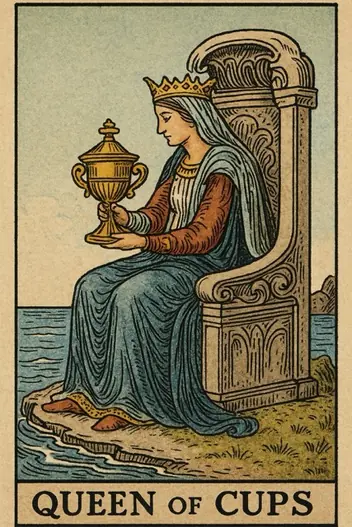
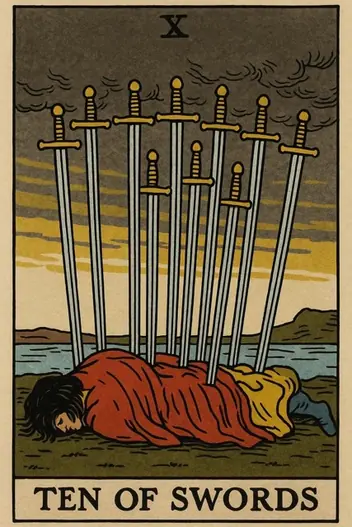
The Queen of Cups embodies emotional intelligence, intuition, and compassionate boundaries. She represents the capacity to feel deeply while maintaining self-awareness. The Ten of Swords signals a final, painful conclusion—often a betrayal, a sudden loss, or a mental breakdown that leaves you feeling defeated. When these two collide, the result is a psychological paradox: you are asked to heal from a wound that feels fatal, while still holding space for your own vulnerability. This combination forces a confrontation between your emotional resilience and the harsh reality of a situation that has reached its breaking point.
In practical terms, this pairing often appears when you have invested significant emotional energy into something—or someone—that has ended abruptly. The Queen’s intuitive wisdom is now needed not to nurture the relationship or project, but to navigate the aftermath with self-compassion and clear-headed analysis. The Ten of Swords demands you stop resisting the end; the Queen asks you to feel the grief without drowning in it. The strategic challenge here is to distinguish between healthy mourning and self-destructive rumination.
Queen of Cups and Ten of Swords: How These Energies Interact
The core dynamic of the Queen of Cups and Ten of Swords is a conflict between emotional openness and psychological survival. The Queen’s strength is her ability to connect with others on a deep, empathetic level. However, the Ten of Swords reveals that this openness has led to a situation where you feel stabbed in the back—perhaps by someone you trusted, or by your own naive expectations. The psychological state is one of acute vulnerability mixed with a sense of betrayal. You may feel simultaneously compassionate toward the person or situation that hurt you, while also recognizing the need to completely sever ties.
This combination highlights a critical cognitive bias: the sunk cost fallacy. You may be tempted to continue nurturing a relationship or project that is clearly dead, simply because you have invested so much emotionally. The Ten of Swords is unambiguous—it represents a definitive end, not a temporary setback. Your emotional intelligence must now be redirected from external care to internal recovery. The Queen’s intuition is your best asset here; she can sense when a situation is truly over, even if your logical mind wants to fight it. The real-world implication is that you must use your empathy to understand why the ending happened, not to rationalize its continuation.
Another key insight is the risk of emotional martyrdom. The Queen of Cups can sometimes attract people who take advantage of her nurturing nature. The Ten of Swords warns that this dynamic has reached a toxic peak. You may be playing the role of the wounded healer, absorbing others’ pain while neglecting your own boundaries. The most strategic action is to withdraw your emotional labor and focus on your own healing. This is not selfishness; it is psychological triage. You cannot pour from an empty cup, especially one that has been shattered by betrayal.
Your pair is already on the table. Ask your question and draw the clarifying card
or simply focus on it
Queen of Cups and Ten of Swords in Love and Relationships
If you are single:
This combination suggests you are healing from a recent emotional wound that feels devastating. Do not rush into a new connection. Instead, use this time to re-evaluate your boundaries and emotional needs before trusting again.
If you are in a relationship:
This pairing indicates a painful breakup, a betrayal, or a realization that the relationship has run its course. The emotional intensity here is high, but the Ten of Swords demands a clean break rather than a messy, drawn-out separation.
The relationship dynamics under this combination are fraught with power imbalances and emotional trauma. The Queen of Cups represents the partner who gives too much, while the Ten of Swords shows the moment when that giving is met with a brutal end. If you are the Queen, you must recognize that your empathy has been weaponized against you. The relationship may have been one-sided, with you providing emotional support while receiving little in return. The Ten of Swords is the final straw—a betrayal, a harsh word, or a sudden abandonment that forces you to see the truth.
Key relationship advice: prioritize your own psychological safety over the desire to understand the other person’s perspective. The Queen’s instinct is to forgive and understand, but the Ten of Swords warns that doing so now would be a form of self-harm. Set firm, non-negotiable boundaries. If you are the one being left, accept that the ending is final. The greatest act of emotional intelligence here is to stop trying to fix what is already dead. Instead, focus on processing your grief through journaling, therapy, or trusted support networks. Do not engage in arguments or attempts to “get closure” from the person who hurt you—the Ten of Swords is closure enough.
Uncover hidden insights
Let our advanced Tarot system interpret these archetypes specifically for your personal path.
Queen of Cups and Ten of Swords in Career Readings
Strategic Opportunities:
The end of a toxic work environment or a failing project frees up your emotional and mental energy for new, healthier opportunities. This is a chance to pivot to a career that aligns with your values.
Strategic Opportunities:
You can use your emotional intelligence to navigate the aftermath with grace. The Queen of Cups can help you maintain professional relationships even after a painful exit, as long as you keep your boundaries firm.
Calculated Risks:
Avoid making sudden financial decisions based on emotional pain. The Ten of Swords can trigger a desire to escape or lash out, which could lead to impulsive resignations or reckless investments.
In the professional realm, the Queen of Cups and Ten of Swords combination signals a painful but necessary career transition. You may have been laid off, passed over for a promotion, or forced to end a long-term project. The emotional impact is real, and you should allow yourself to grieve. However, the Ten of Swords is a clear signal that this chapter is over. Do not cling to a role that no longer serves you, even if it feels like a betrayal from your employer or colleagues.
Financial warning: the Queen of Cups can be overly trusting with money, especially when it comes to helping others. The Ten of Swords suggests that a financial arrangement based on trust has now failed—perhaps a loan to a friend or a partnership that dissolved. Do not throw good money after bad. Cut your losses and consider any remaining debts or obligations as sunk costs. Strategically, this is a time for austerity and rebuilding, not for speculative ventures. Use your intuition to sense which professional connections are genuine and which are toxic. The Queen’s emotional radar is sharp; trust it to guide you away from further exploitation.
Queen of Cups and Ten of Swords Reversed: How to Read It
Queen of Cups Reversed:
This indicates blocked emotional intelligence or reckless impulsivity. Instead of managing the crisis, the person drowns it in tears or hysterics. Warning: you risk destroying your reputation by demonstrating an inability to control your emotions. Advice: intentionally distance yourself from the situation for 24 hours before making any decisions.
Ten of Swords Reversed:
This is an internal resistance to an inevitable end. The person is grasping at straws, denying the obvious collapse. Advice: the fear of change here is stronger than the fear of suffering. You need to acknowledge that a "dead horse" won't gallop and stop wasting resources on it. This is a position of weakness, not strength.
BOTH Reversed:
Complete imbalance. Emotional instability (reversed Queen) combines with paralysis of will (reversed Ten). The logical way to correct this: external intervention is required—a coach, psychologist, or mentor. It is practically impossible to escape this chaos on your own, as both clarity of thought and the capacity for action are absent.
When Queen of Cups and Ten of Swords Signal Trouble
The shadow side of this combination is emotional paralysis and victimhood. The Queen of Cups can easily become a martyr, wallowing in the pain of the Ten of Swords instead of using it as a catalyst for growth. The cognitive bias here is catastrophizing—believing that because this ending was painful, all future investments of trust will end the same way. This leads to self-sabotage through isolation or passive-aggressive behavior.
Another pitfall is codependency. The Queen’s nurturing nature may have attracted a partner or boss who took advantage of her. Now, the Ten of Swords reveals the truth, but the Queen may still try to “help” the person who hurt her. This is a form of denial. The shadow response is to ignore the finality of the Ten of Swords and attempt to resurrect a dead situation, which only prolongs the suffering. The most dangerous move is to use emotional intelligence to manipulate the outcome, rather than to accept it. Recognize when your empathy is being used as a weapon against your own well-being.
Queen of Cups and Ten of Swords: The Combined Message
Constructive use of this dynamic requires you to assume the role of "architect of closure." Your task is not to fight the wind, but to design a safe harbor for yourself after the storm. The energy of the Queen of Cups here is not about endless consolation, but about high emotional competence, allowing you to conduct a "clean" breakup or project closure without guilt or mutual recrimination.
Your strategy is to act with a cold heart and a warm mind. Accept the fact that the situation is over (Ten of Swords), but do not let it harden you. Use your empathy to understand what lesson you have learned and how this experience makes you more resilient. A deep piece of advice: transform your pain into a filter for future decisions. Now you know exactly which red flags cannot be ignored and which compromises are destructive.
Instead of saving what is dying, direct your care toward yourself and toward building a new structure. Clarity comes when you stop clinging to the past and begin designing the future. This combination is not a verdict, but an instruction for an ecologically sound exit from crisis while preserving your self-respect.
Applying This to Your Situation
The Queen of Cups and Ten of Swords together deliver a stark message: you must use your emotional strength to accept a painful ending, not to fight it. Your intuition is your greatest asset in discerning which situations are worth saving and which are already dead. The core message is one of psychological triage—prioritize your own healing over external obligations. This combination is not a curse; it is a necessary surgery that removes what no longer serves your growth.
However, this general analysis can only go so far. The true power of Tarot lies in how these archetypes interact with your specific life circumstances. To get a deep, personalized interpretation of this exact combination for your unique question—whether it’s about a relationship, career move, or personal crisis—use the Fortune Cards app. It’s available on the web and as a download, and it will give you a tailored reading that accounts for your exact situation, right now. Don’t settle for generic advice when you can have clarity that fits your life.
Interpretation by the Fortune Cards editorial team, based on the Rider–Waite tradition and Jungian archetypes. About our methodology · Updated: 2026-08-26
Other Combinations with Queen of Cups
Other Combinations with Ten of Swords
Explore Individual Card Meanings
Table of Contents
- Queen of Cups and Ten of Swords: How These Energies Interact
- Queen of Cups and Ten of Swords in Love and Relationships
- Queen of Cups and Ten of Swords in Career Readings
- Queen of Cups and Ten of Swords Reversed: How to Read It
- When Queen of Cups and Ten of Swords Signal Trouble
- Queen of Cups and Ten of Swords: The Combined Message
- Applying This to Your Situation
Ready to find answers to your questions?
Start your first reading now and look at your situation with fresh clarity. The cards are ready to reveal deeper meaning.