Three of Swords and Three of Pentacles Together in Tarot
- Arcana
- Three of Swords — Minor Arcana, Swords; Three of Pentacles — Minor Arcana, Pentacles
- Elements
- Three of Swords — Air; Three of Pentacles — Earth
- Elemental interaction
- Opposing elements — energies create tension
- Numerology
- 3 + 3 = 6
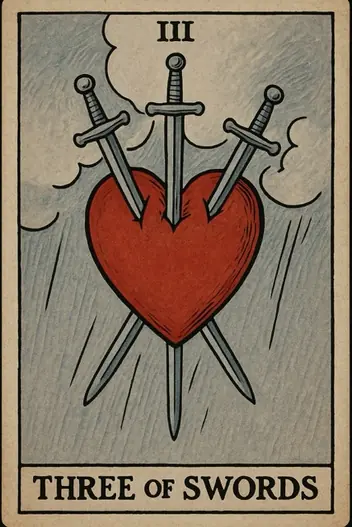
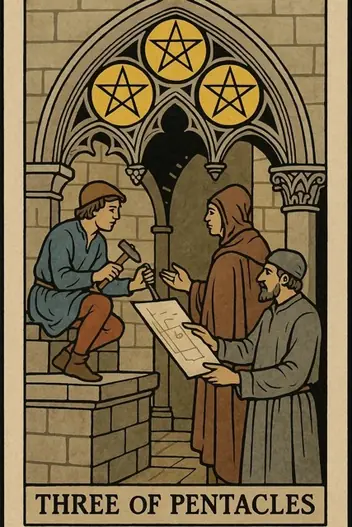
The Three of Swords represents heartbreak, cognitive dissonance, and the piercing truth that shatters comfortable illusions. The Three of Pentacles embodies collaboration, skill-building, and the disciplined execution of a plan. When these two cards collide, they create a powerful tension: the raw emotional pain of the swords meets the structured, practical world of pentacles. This is not a passive combination; it demands that you use your grief as raw material for mastery.
Psychologically, this pairing reflects a crucial stage in individuation. You are being asked to integrate a painful truth (Three of Swords) into your daily work and identity (Three of Pentacles). The result is a form of alchemical transformation—where emotional wounds are not suppressed, but consciously examined and channeled into tangible, high-quality output. This is the moment when a therapist processes their own trauma to become a better healer, or a designer turns a failed relationship into a groundbreaking creative project.
Three of Swords and Three of Pentacles Combination Meaning
The core dynamic here is the collision of subjective feeling with objective process. The Three of Swords is a card of acute emotional pain—betrayal, rejection, or the collapse of a cherished narrative. The Three of Pentacles, by contrast, is cool, collaborative, and results-oriented. When these two meet, the seeker is forced to work through their emotional turmoil in a structured, visible way. There is no room for wallowing; the pentacles demand you show up and perform.
This combination often appears when you are rebuilding after a significant loss—a divorce, a career setback, or a betrayal of trust. The psychological state is one of disciplined grief. You feel the sharp sting of the swords, but you are not paralyzed. Instead, you are learning to compartmentalize effectively: allowing yourself to feel the pain in private while maintaining professional composure in public. The key insight is that your pain can become a source of specialized knowledge. The Three of Pentacles rewards expertise born from lived experience.
However, there is a risk of over-intellectualizing emotions. You might use the structure of work (Three of Pentacles) as a defense mechanism to avoid fully processing the swords. The challenge is to ensure that your productivity is not a form of escape, but a conscious integration. True mastery comes from working with your wounds, not around them.
Your pair is already on the table. Ask your question and draw the clarifying card
or simply focus on it
Love and Relationships
If you are single:
This pair suggests you are attracted to people who are practical, ambitious, and emotionally unavailable as a defense against your own hurt. Focus on whether a new connection feels like a collaborative partnership or a project to fix.
If you are in a relationship:
You and your partner may be avoiding emotional intimacy by focusing on shared tasks—household chores, career goals, or planning. This is a signal to schedule time for raw, unstructured emotional conversation outside of your productive routines.
In romantic contexts, the Three of Swords and Three of Pentacles together reveal a relationship that is being managed rather than felt. One or both partners may be using busyness and productivity as a shield against vulnerability. The pain (Three of Swords) is present—perhaps a past betrayal or ongoing disappointment—but the response is to double down on practical arrangements rather than address the emotional wound. This is a warning against turning your partner into a colleague.
The key relationship advice here is to establish a boundary between "work mode" and "intimacy mode." If you are in a conflict, do not try to "fix" it with a to-do list or a schedule. Instead, sit with the discomfort. The Three of Pentacles can be a healthy force if used to build a shared ritual of emotional check-ins—treating your emotional health as a craft that requires regular, focused attention. For singles, this combination warns against projecting a "project manager" mentality onto a new relationship; allow the connection to be messy and inefficient initially.
Your unique Tarot reading
See how these cards interact with your destiny. Start a free personal reading now.
Career Meaning of Three of Swords and Three of Pentacles
Strategic Opportunities:
Use a recent professional failure or critique as the foundation for a new skill-building plan. Enroll in a certification course or seek a mentor.
Strategic Opportunities:
Turn your personal pain into a niche expertise. If you have overcome a specific professional challenge (e.g., a toxic work environment, a failed startup), write a case study or offer consulting on that exact topic.
Calculated Risks:
Avoid partnerships that feel emotionally draining or exploitative. Do not accept a role where you are expected to "heal" a toxic team culture at the expense of your own well-being.
In the professional realm, this combination is a powerful signal for focused, post-crisis career development. The Three of Swords may indicate a recent layoff, a failed project, or a public humiliation at work. The Three of Pentacles says: Use that pain to sharpen your craft. This is an excellent time to take a class, join a mastermind group, or seek feedback from a trusted colleague. Your vulnerability can become a competitive advantage if you frame it as hard-won wisdom.
Financially, this is a time for conservative but strategic investment. The Three of Pentacles rewards incremental, quality work—not risky gambles. Do not make major financial decisions while emotionally raw (Three of Swords). Instead, use the pentacle energy to create a detailed budget or financial plan that accounts for your current emotional state. If you are self-employed, consider collaborating with a specialist (accountant, strategist) to structure your recovery. The warning is clear: Do not let your pain drive you to overwork for validation. Your worth is not tied to your output.
Reversed Three of Swords and Three of Pentacles Explained
When cards appear reversed, the dynamic shifts from external conflict to internal sabotage.
If the Three of Swords is reversed:
The pain is denied or suppressed. You are not crying, not getting angry, but pretending everything is fine. This is a blocked potential for healing. Instead of living through the crisis, you push it into the subconscious, leading to passive aggression or inexplicable mistakes at work. Advice: allow yourself to suffer. Without catharsis, there will be no true mastery.
If the Three of Pentacles is reversed:
This is internal resistance and weakness. You sabotage any teamwork or learning. Instead of making an effort, you blame the system, colleagues, or the "toxic atmosphere." In the context of the Three of Swords, this means you are using your pain as an excuse for laziness. Warning: you risk remaining in the position of the "offended genius" who creates nothing.
If BOTH are reversed:
A complete imbalance arises. You are in a state of apathy and victimhood. The pain is not acknowledged, and the work is not done. This is the classic "burnout on the couch" scenario. The logical way to correct this: a total stop is necessary. Cease any activity related to the cards. Leave the project, take a vacation. Only by dealing with the emotions (upright Three of Swords) and restoring discipline (upright Three of Pentacles) will you be able to move forward.
Three of Swords and Three of Pentacles: Warning Signs
The shadow of this combination is toxic productivity as a form of emotional avoidance. The Three of Swords wants to be felt; the Three of Pentacles wants to be done. When the balance tips too far toward the pentacles, you become a workaholic who uses achievement to numb pain. This leads to burnout, resentment, and a hollow sense of accomplishment. Cognitively, this manifests as confirmation bias: you only accept feedback that reinforces your "hard worker" identity, ignoring the emotional truth that you are hurting.
Another pitfall is perfectionism born from shame. The Three of Swords can create a deep sense of unworthiness ("I am not enough"), which the Three of Pentacles tries to fix by demanding flawless performance. This creates a cycle of anxiety and overcorrection. You may become hyper-critical of your own work and the work of others, damaging collaborative relationships. The shadow also includes using collaboration to avoid solitude—surrounding yourself with colleagues so you never have to sit alone with your grief. The antidote is deliberate, scheduled downtime where you do nothing productive.
What Is the Overall Message of Three of Swords and Three of Pentacles?
How to constructively use the energy of the Three of Swords to balance the Three of Pentacles? The key lies in the principle of integration. The Three of Swords is not an enemy, but a critical feedback signal. Your task is not to drown out the pain with work, but to decipher its message.
The strategic algorithm of action is as follows: stop, analyze, delegate. Stop trying to do everything "perfectly." Allow yourself to be vulnerable in a professional setting. Tell your team: "I need help, I'm burning out." This is not weakness, but the highest level of resource management. The Three of Pentacles in a healthy state is about synergy, not a solo feat.
A deep piece of advice: use the pain as a filter for priorities. Which task causes you the greatest resistance and pain? That is likely the one you need to delegate or automate. Conversely, which activity brings you relief? Focus on that. In this context, the Three of Swords is a surgical scalpel that cuts away the excess, leaving only what truly matters for your growth.
Where to Go From Here
The core message of Three of Swords and Three of Pentacles is this: Your pain is not a distraction from your work; it is the raw material for your mastery. The path forward is not to escape your emotions through productivity, but to apply the discipline of craftsmanship to your own healing. By treating your grief as a subject to study and a skill to refine, you transform a wound into wisdom. This is the essence of Jungian integration—making the unconscious conscious through deliberate, practical action.
However, every seeker’s situation is unique. General interpretations can only take you so far. To truly understand how this powerful combination applies to your specific relationship, career, or personal question, you need a personalized reading. The Fortune Cards app offers deep, context-aware interpretations that analyze your exact cards and your specific question in real time. Whether you are on the web or using the mobile app, you can get an immediate, tailored analysis of the Three of Swords and Three of Pentacles for your unique life situation. Stop guessing—get your personalized insight now.
Interpretation by the Fortune Cards editorial team, based on the Rider–Waite tradition and Jungian archetypes. About our methodology · Updated: 2026-08-26
Other Combinations with Three of Swords
Other Combinations with Three of Pentacles
Explore Individual Card Meanings
Table of Contents
- Three of Swords and Three of Pentacles Combination Meaning
- Love and Relationships
- Career Meaning of Three of Swords and Three of Pentacles
- Reversed Three of Swords and Three of Pentacles Explained
- Three of Swords and Three of Pentacles: Warning Signs
- What Is the Overall Message of Three of Swords and Three of Pentacles?
- Where to Go From Here
Ready to find answers to your questions?
Start your first reading now and look at your situation with fresh clarity. The cards are ready to reveal deeper meaning.