The Tower and Ten of Swords Together in Tarot
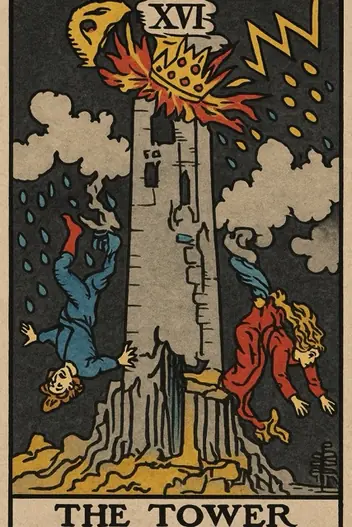
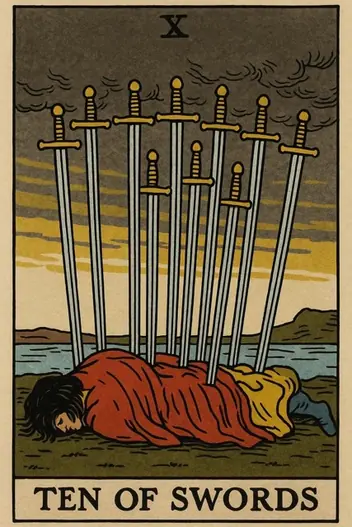
- Arcana
- The Tower — Major Arcana; Ten of Swords — Minor Arcana, Swords
- Elements
- The Tower — Fire; Ten of Swords — Air
- Elemental interaction
- Friendly elements — energies support each other
- Numerology
- 16 + 10 = 26 → 8
When The Tower and Ten of Swords appear together, they represent a psychological and situational breaking point—a moment where a structure you relied upon is violently dismantled, and the pain of that collapse becomes undeniable. The Tower is the sudden, catastrophic event: a job loss, betrayal, health crisis, or shattered belief system. The Ten of Swords is the aftermath: the feeling of being pinned down, exhausted, and seeing no way out. In Jungian terms, this is the shadow of hubris colliding with the ego’s final surrender. The key insight here is that this is not a random disaster, but a necessary ego-death—a clearing of old, brittle patterns to make room for something authentic. The real question is not "Why me?" but "What false structure was I clinging to?"
What Do The Tower and Ten of Swords Mean Together?
The core dynamic of this pairing is crisis as catalyst. The Tower forces a sudden, often violent, disruption of your status quo, while the Ten of Swords represents the lowest point—the moment when you feel completely defeated, betrayed, or overwhelmed. Psychologically, this is the Nietzschean "abyss" where you must either break or rebuild. The combination reveals a cognitive dissonance between what you thought was stable (The Tower) and the reality that it was already rotten (Ten of Swords). This is not the end of the story; it is the end of a false story.
In practical terms, this signals a mandatory reset. You cannot negotiate, compromise, or patch up the situation. The energy demands that you stop resisting the collapse and instead focus on damage control and emotional triage. The most important action is to stop adding new pain to old wounds. This means cutting ties with the person, job, or belief system that is causing the crisis, even if it feels like a defeat. The mindset required is stoic acceptance: "This is happening. What can I salvage from the wreckage?" The psychological payoff is that once the dust settles, you will have a clearer, more grounded sense of what is actually worth rebuilding.
Your pair is already on the table. Ask your question and draw the clarifying card
or simply focus on it
What Do The Tower and Ten of Swords Say About Love?
If you are single:
This combination warns against pursuing a relationship that feels like a "rescue mission." The person you're drawn to may be in a state of collapse, and getting involved now will only drag you into their chaos. Instead, focus on your own recovery.
If you are in a relationship:
A sudden, painful truth is about to surface. This could be a betrayal, a fundamental incompatibility, or a long-ignored issue that can no longer be hidden. The relationship as you knew it is ending.
In relationships, The Tower and Ten of Swords signal a relationship-ending crisis or a profound transformation through conflict. This is not a time for gentle mediation. The shadow side here is the temptation to play the martyr—to stay in a toxic situation out of guilt, fear, or a mistaken sense of duty. The pragmatic advice is to recognize that some relationships are meant to be destroyed so that both parties can heal separately. If you are the one being hurt (Ten of Swords), your priority is self-preservation, not reconciliation. If you are the one causing the collapse (The Tower), take full responsibility and accept the ending without blaming the other person. The emotional intelligence required is the ability to distinguish between a relationship that can be rebuilt and one that must be laid to rest.
Career Meaning of The Tower and Ten of Swords
Strategic Opportunities:
The collapse of a toxic work environment or a failing project creates space for a more aligned career path. Use this as a forced opportunity to pivot.
Strategic Opportunities:
You now have a clear, undeniable data point about what doesn't work. This is invaluable for future decision-making.
Calculated Risks:
Avoid making any major financial commitments or legal agreements for at least 30 days. Your judgment is clouded by shock and grief.
In your professional life, this card pair predicts a major disruption—a layoff, a business failure, a public scandal, or a partnership dissolution. The smartest financial move is to cut your losses immediately. Do not pour more money or energy into a sinking ship. This is a classic "stop-loss" moment in trading terms. For career strategy, focus on liquidating assets or obligations that tie you to the old structure. The Ten of Swords advises that the worst is over—you are at the bottom. From here, the only direction is up, but you must first let go of the corpse of your old career identity. A key psychological trap is "sunk cost fallacy" —the belief that you must keep investing because you've already lost so much. Resist this. The collapse is telling you that the investment was flawed from the start.
Your unique Tarot reading
See how these cards interact with your destiny. Start a free personal reading now.
Shadow Side & Pitfalls
The shadow side of this combination is catastrophizing and chronic victimhood. When the energy is blocked, you may experience the collapse but refuse to learn from it, instead repeating the same patterns in a new context. Alternatively, you might become paralyzed by fear of another Tower moment, leading to a life of excessive caution and missed opportunities. Cognitive biases to watch for include "hindsight bias" (blaming yourself for not seeing it coming) and "confirmation bias" (only seeing evidence that confirms the world is out to get you). The most dangerous pitfall is the "martyr complex" —using the pain of these cards to gain sympathy or avoid personal responsibility. The shadow demands that you stop identifying as the victim of your story and start seeing yourself as the survivor who chose to walk away. If you find yourself saying "this always happens to me," you are in the shadow. The healthy response is: "This happened. Now what?"
Reversed Positions: What Changes?
If The Tower is Reversed:
The crisis is prolonged due to denial of the obvious. You may feel that "everything is about to get better," but objective factors indicate the opposite. Advice: Stop making excuses and acknowledge that the system is not working. Warning: The longer you delay admitting the collapse, the more painful the fall will be.
If the Ten of Swords is Reversed:
Internal resistance to completion. You may be clinging to a relationship, job, or project that has already exhausted itself. Advice: Ask yourself what you lose by letting go. Often, the fear of emptiness proves stronger than the fear of pain. Warning: A prolonged ending transitions into chronic depression.
If BOTH are Reversed:
Complete dynamic imbalance — you are simultaneously denying the crisis and resisting completion. This is a state of will paralysis. Logical method of correction: Start small — close one obviously unpromising project or end one toxic communication. Advice: Seek an external consultant or mentor, as you cannot see a way out on your own.
What Is the Overall Message of The Tower and Ten of Swords?
Constructive use of this pair's energy requires a paradoxical approach: accept destruction as a given, but do not allow it to paralyze your will. The key strategy is to shift focus from "why did this happen" to "what do I do now." The Tower gives you the energy to break with the past; the Ten of Swords provides clarity on what exactly must end.
Your task is to create a "buffer zone" between destruction and a new beginning. Do not attempt to immediately build something new on the ruins. First, conduct an "inventory": what from past experience is worth taking with you, and what should be left behind. A deep strategic counsel: use the next 72 hours for a complete disconnection from decision-making. Allow your psyche to digest what has occurred. Then, when the emotional storm subsides, draw up an action plan based on the principle of a minimum viable strategy: one step, one project, one goal.
Remember that this combination is not a sentence, but a diagnostic tool. It shows where your life demands radical honesty. Only by passing through this crisis without attempting to soften the blow will you gain access to a new level of maturity and resilience.
Where to Go From Here
The Tower and Ten of Swords are not a prophecy of doom; they are a diagnosis of a necessary ending. The core message is that you cannot build a new life on a false foundation. The collapse is painful, but it is also a gift—it forces you to stop wasting energy on something that was already broken. Your next step is to accept the ending, grieve what is lost, and refuse to look back.
This article gives you the archetypal map, but your specific situation is unique. The true power of Tarot lies in applying these insights to your exact question. Use the Fortune Cards app to get a deep, personalized interpretation of The Tower and Ten of Swords for your specific relationship, career, or personal growth challenge. You can access it on the web or download it now. Don't just read about the collapse—understand how to navigate your own. Get your personalized reading today.
Interpretation by the Fortune Cards editorial team, based on the Rider–Waite tradition and Jungian archetypes. About our methodology · Updated: 2026-08-26
Other Combinations with The Tower
Other Combinations with Ten of Swords
Explore Individual Card Meanings
Table of Contents
Ready to find answers to your questions?
Start your first reading now and look at your situation with fresh clarity. The cards are ready to reveal deeper meaning.