Ace of Cups and Ten of Swords Tarot as Feelings
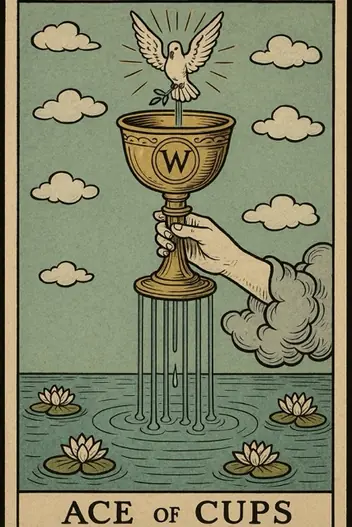

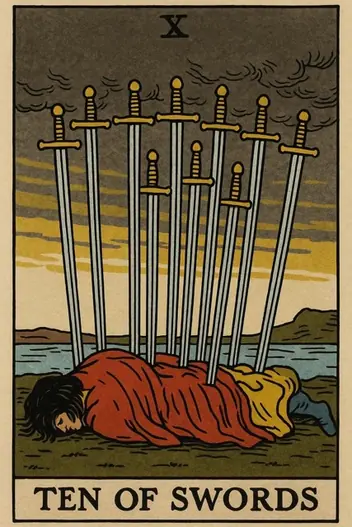
- Arcana
- Ace of Cups — Minor Arcana, Cups; Ten of Swords — Minor Arcana, Swords
- Elements
- Ace of Cups — Water; Ten of Swords — Air
- Elemental interaction
- Neutral elements — energies coexist without conflict
- Numerology
- 1 + 10 = 11 → 2
The collision of the Ace of Cups and the Ten of Swords represents one of Tarot’s most psychologically charged pairings. The Ace of Cups is the archetype of new emotional beginnings, raw vulnerability, and the unguarded flow of love or intuition. The Ten of Swords, in stark contrast, symbolizes a definitive ending, a painful betrayal, or hitting rock bottom through mental exhaustion. When these two meet in a reading, the core dynamic is not simply "pain then joy," but a specific psychological process: the conscious decision to open your heart again after a devastating intellectual or emotional defeat.
This combination forces a pragmatic question: How do you rebuild emotional trust when your rational mind has been shattered by experience? The answer lies not in forgetting the past, but in integrating the lesson of the Ten of Swords—the need for clear boundaries and mental clarity—into the open, receptive state of the Ace of Cups. This is not naive optimism; it is calculated vulnerability.
What Do Ace of Cups and Ten of Swords Mean Together?
The psychological state created by this pairing is one of paradoxical clarity. The Ten of Swords represents the moment when a painful thought pattern, a toxic situation, or a relationship has reached its absolute limit. It is the "worst is over" card, but the pain is still acute. The Ace of Cups enters not as a bandage, but as a new emotional template. The key insight here is that the heart is opening because the mind has been cleared—the swords (thoughts, worries, arguments) are removed from the ground, making space for the cup to overflow.
This is not a passive waiting for healing. It is an active choice: recognizing that the mental defeat of the Ten of Swords is the necessary price for the emotional renewal of the Ace. In real-world terms, this shows up as someone who has just ended a toxic work environment, a draining friendship, or a painful romantic cycle, and suddenly feels a rush of unexpected hope or a new creative impulse. The danger is premature emotional investment—using the new feeling of the Ace to avoid processing the lessons of the Ten. The mature path is to acknowledge the wound, accept the ending, and then consciously channel the new emotional energy into a more structured, boundary-aware vessel.
Career and Finances
Strategic Opportunities:
Pivot to a new creative project or role that requires emotional investment. Your recent professional failure has cleared the deck for a genuinely inspiring venture.
Strategic Opportunities:
Leverage your recent "defeat" as a compelling narrative. Use the lessons learned from a project collapse to position yourself as a resilient, insightful leader.
Calculated Risks:
Avoid making major financial decisions based on a sudden surge of optimism. The Ace of Cups can create a "feel-good" bias. Wait 48 hours before signing any contracts.
From a career perspective, this combination signals the end of a mentally exhausting cycle—perhaps a failed business venture, a toxic boss, or a project that drained your creativity. The Ten of Swords here is the final report, the layoff notice, or the public failure. The Ace of Cups represents a new professional passion that feels deeply aligned with your values. The strategic move is to treat this as a "reboot" of your professional identity. Do not try to fix the old project; start something new. Financially, the Ten of Swords warns of a "bottom" having been reached—things are unlikely to get worse. Bold financial warning: Do not use credit or loans to fund the new inspiration from the Ace. Let it grow organically. The risk is emotional spending—buying courses or tools out of excitement rather than necessity. Focus on resource conservation and intellectual property rather than cash flow.
Your pair is already on the table. Ask your question and draw the clarifying card
or simply focus on it
Love and Relationships
If you are single:
This pairing warns against mistaking emotional relief for genuine romantic connection. You may feel a sudden urge to open up to someone new, but ensure you have fully processed the recent ending first. Use the Ten of Swords' clarity to vet new partners for emotional safety.
If you are in a relationship:
This is a critical turning point. A major betrayal or painful argument has likely occurred. The Ace of Cups offers a chance for genuine reconciliation, but only if the underlying issue (the swords) is explicitly named and resolved. Do not use emotional affection to gloss over a fundamental breach of trust.
In relationship dynamics, the Ace of Cups and Ten of Swords together demand emotional intelligence over emotional reactivity. The Ten of Swords often represents a moment where one partner feels "killed" by words or actions—a final straw. The Ace of Cups then asks: "Can you rebuild intimacy without forgetting what broke it?" The most powerful action here is to create a "post-mortem" conversation. Discuss what died (the Ten of Swords) and what you both want to birth (the Ace of Cups). Bold relationship advice: Do not enter a new phase of intimacy until you have both agreed on the boundaries that will prevent a repeat of the betrayal. This is about conscious repair, not impulsive forgiveness.
What Are the Risks of Ace of Cups and Ten of Swords?
The shadow manifestation of this pairing is emotional avoidance disguised as spiritual growth. The seeker may use the "new beginning" energy of the Ace of Cups to avoid the painful, gritty work of processing the Ten of Swords. This looks like: jumping into a new relationship immediately after a breakup without understanding why the last one failed, or quitting a job in a "blaze of glory" without a concrete plan. The cognitive bias at play is optimism bias—believing that because the pain is intense, the relief must be pure and permanent. The shadow also includes martyrdom complex: holding onto the "victim" identity of the Ten of Swords to justify emotional withdrawal, while simultaneously craving the connection of the Ace. This creates a paralyzing loop where the seeker feels both "dead" and "alive," unable to commit to either state. The critical self-sabotage pattern is indecision—waiting for the perfect, painless opening of the heart that never comes.
Deepen your understanding
Find out exactly what this reading means for your current life situation with our oracle.
Reversed Ace of Cups and Ten of Swords Explained
If the Ace of Cups is Reversed:
The potential for a new emotional connection or creative inspiration is blocked. This may be caused by suppressed empathy or a fear of rejection. Instead of opening up, you isolate yourself. Advice: start small — allow yourself one minute of sincere joy or gratitude without analyzing the consequences.
If the Ten of Swords is Reversed:
The crisis is not over. You are resisting the inevitable end, clinging to dying relationships or ideas. This is a state of internal resistance and weakness that prolongs the pain. Warning: delaying the inevitable will only multiply the suffering.
If BOTH are Reversed:
Complete imbalance: you are incapable of either sincere openness (Ace) or decisive closure of a cycle (Ten). This creates a paralysis of the will — you are stuck in the swamp of the past. Corrective strategy: apply the "cold shower" of analysis. Make a list of what is objectively dead, and a list of what you can start from scratch. Act on these points, ignoring the emotions.
Synthesis: Strategic Conclusion
Constructive use of this dynamic requires radical acceptance and reassembly. The energy of the Ace of Cups is not about "enduring and hoping," but about the capacity for rebirth after a blow. The Ten of Swords is not about "punishment," but about liberation from illusions. Your task is to use destruction as a surgical instrument that cuts out the cancerous tumor from your life.
Psychologically, to balance this pair, you need to shift from the role of "Victim" to the role of "Observer." Tell yourself: "Yes, this is painful. Yes, I misjudged. But I am not my pain. I am the one who experiences it and draws conclusions." Strategic advice: do not try to "heal the wound" with new love or a new project. First, allow yourself a period of emptiness. The Ace of Cups in its healthy manifestation is a source that fills only in silence, not in chaos.
Your main tool right now is cold analysis of the past. Break the situation down into facts: where did you ignore red flags? Where did your intuition (the Ace) try to warn you, but you didn't listen? The answers to these questions will turn "death" (the Ten) into "transformation." Only by passing through this mirror can you open a new Ace of Cups—one with a clear vision of reality, not rose-colored glasses.
Where to Go From Here
The core message of the Ace of Cups and Ten of Swords is that your greatest emotional defeat is the gatekeeper to your most authentic beginning. The mind must be emptied of old, sharp patterns before the heart can truly fill. This is not a promise of easy happiness, but a call to consciously integrate your pain into your new path. The general meaning is clear: an ending makes way for a new emotional start, but only if you act with awareness and boundaries.
But how this plays out for you depends entirely on your specific situation—your history, your current question, and the other cards in your spread. That is where the true power of Tarot lies. To get a deep, personalized interpretation of this exact combination for your unique question right now, use the Fortune Cards app. Available on the web or as a download, it analyzes your specific context and delivers actionable, psychologically grounded insights. Stop guessing. Start understanding. Try Fortune Cards today.
Interpretation by the Fortune Cards editorial team, based on the Rider–Waite tradition and Jungian archetypes. About our methodology · Updated: 2026-08-26
Other Combinations with Ace of Cups
Other Combinations with Ten of Swords
Explore Individual Card Meanings
Ready to find answers to your questions?
Start your first reading now and look at your situation with fresh clarity. The cards are ready to reveal deeper meaning.