The Hermit and Ten of Swords Tarot as Feelings
- Arcana
- The Hermit — Major Arcana; Ten of Swords — Minor Arcana, Swords
- Elements
- The Hermit — Earth; Ten of Swords — Air
- Elemental interaction
- Opposing elements — energies create tension
- Numerology
- 9 + 10 = 19 → 1
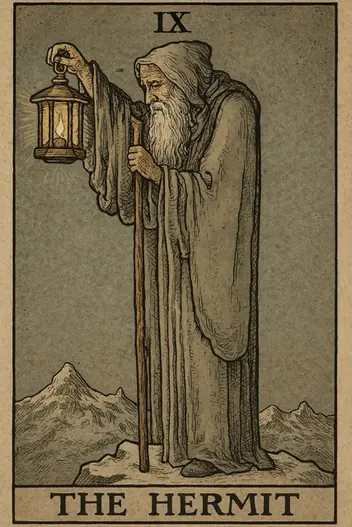
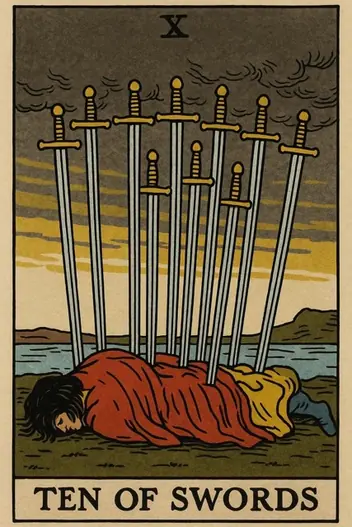
When the Hermit’s solitary lantern meets the Ten of Swords’ final defeat, we witness a psychological paradox: the lowest point becomes the catalyst for the deepest wisdom. This combination rarely signals a random disaster; instead, it represents a calculated collapse—the moment when a false self, a toxic pattern, or an unsustainable situation must die to make way for authentic living. The Hermit provides the introspective distance needed to see the corpse clearly, while the Ten of Swords ensures the lesson is final.
Core Dynamics & Interpretation
The core tension here is between forced surrender (Ten of Swords) and voluntary withdrawal (The Hermit). The seeker is being asked to accept that a part of their life—a relationship, a career path, or a core belief—has reached a terminal endpoint. The Hermit’s energy prevents the seeker from rushing to patch things up or deny the severity of the loss. Instead, it insists on a period of mourning and analysis.
Psychologically, this is the archetype of the Wounded Healer. The ego must be “slain” by the Ten of Swords before the Hermit can guide the soul into the wilderness for true self-discovery. The strategic move is not to fight the ending, but to extract the data. Ask: What specific belief system or action pattern led to this defeat? The answer is the Hermit’s treasure. The Ten of Swords provides the brutal clarity; the Hermit provides the framework to process it without self-destruction.
This combination demands ruthless self-honesty. Avoid the cognitive bias of “magical thinking”—the belief that this ending is just a temporary setback. It is not. This is a structural failure that requires a complete re-evaluation of your foundation. The only productive action is to isolate, reflect, and document the lessons before any new beginning is attempted.
Your pair is already on the table. Ask your question and draw the clarifying card
or simply focus on it
What Do The Hermit and Ten of Swords Indicate for Your Career?
Strategic Opportunities:
Accept the failure as a tuition fee. Use the Hermit’s analytical energy to audit exactly how your strategy, timing, or network failed. This is the raw material for your next, more resilient move.
Strategic Opportunities:
Identify the single, non-negotiable lesson. This card pair often signals the end of a job, a project, or a business model. The opportunity is to pivot to a path that aligns with your authentic values, not external validation.
Calculated Risks:
Avoid any immediate financial rescue missions. Do not take on debt to salvage a dying venture. The Ten of Swords warns that further investment is throwing good money after bad. The risk is emotional bankruptcy, not just financial.
In your professional life, this is a termination event—a layoff, a failed launch, or a public mistake. The Hermit insists you do not isolate out of shame, but out of strategy. Retreat to analyze the market, your skills, and your network with brutal objectivity. Financial warning: Do not make a major asset purchase or sign a long-term lease for at least 90 days. Your judgment is clouded by the shock of the defeat. Strategic tip: Use this forced downtime to update your portfolio, learn a new skill, or network with former mentors who can offer candid feedback. The Hermit’s light is not for hiding; it is for reading the map in the dark.
Ask your specific question
Don't rely on generic meanings. Get a customized reading tailored specifically to your energies.
The Hermit and Ten of Swords in Love Tarot
If you are single:
This combination suggests you are emerging from a relationship or pattern that ended decisively and painfully. Do not seek a rebound. Your primary task is to understand why you tolerated or attracted this ending. The Hermit demands a period of celibate self-study before you can attract a healthier dynamic.
If you are in a relationship:
The partnership is likely at a breaking point due to a fundamental betrayal, a long-term misalignment of values, or a crushing emotional blow. A temporary separation for deep reflection is not a threat; it is a diagnostic necessity.
The relationship dynamic is one of exhaustion and finality. The Ten of Swords indicates that one or both partners feel “stabbed in the back” or have reached a limit of emotional endurance. The Hermit warns against blaming or seeking revenge. The most courageous act is to step back and examine your own contribution to the conflict. This is not about fixing the relationship; it is about deciding if the relationship’s core premise is still viable. Boundaries are not walls; they are data points. If you choose to stay, you must do so with the cold-eyed clarity of the Hermit, not the desperate hope of a martyr. Key advice: Prioritize emotional safety over reconciliation.
Reversed The Hermit and Ten of Swords Explained
When cards appear reversed, the dynamic becomes less fatal but more complex to diagnose.
If The Hermit is reversed:
You are afraid to be alone with yourself and cling to destructive connections. This is a state of panicked avoidance of solitude. You agree to the role of "victim" (reversed Ten of Swords), just to avoid silence. Advice: it is critically important for you to stop drowning out your inner voice with the noise of external conflicts. Fleeing from solitude is now more dangerous than isolation itself.
If the Ten of Swords is reversed:
The crisis has dragged on, but the end has not yet arrived. You are in a state of "death throes"—resisting the inevitable. The Hermit here may indicate an illusion of control: you think solitude will help you fix everything, but in reality, you are merely postponing the inevitable. Warning: prolonging the decision will lead to a harder fall.
If BOTH are reversed:
Complete imbalance and denial of reality. The person refuses to acknowledge that their strategy (withdrawal into self) has failed, and simultaneously does not allow themselves to experience the ending. This leads to chronic depression and passive aggression. Logical course of correction: it is necessary to urgently break the isolation and seek professional help (psychologist, coach), as breaking this cycle on your own is nearly impossible.
The Hermit and Ten of Swords: Warning Signs
The shadow of this combination manifests as chronic rumination or paralyzing cynicism. The seeker may become addicted to the story of their defeat, replaying the “stabbing” endlessly without extracting the lesson. This is intellectual avoidance disguised as analysis. Another pitfall is toxic self-blame—the Hermit’s introspection turns into a court of self-prosecution, where the seeker believes they deserved the Ten of Swords. This is a cognitive distortion: “I am inherently flawed, therefore this failure was inevitable.” The truth is more pragmatic: “I used a flawed strategy. I can learn a new one.”
The most dangerous bias here is over-generalization. The Ten of Swords says “This specific thing is over.” The shadow interprets it as “Everything is over.” The Hermit’s job is to prevent that leap. If the seeker refuses to isolate and reflect, they risk repeating the same pattern in a different disguise, creating a self-fulfilling prophecy of failure. The shadow also includes social withdrawal that becomes permanent, mistaking solitude for wisdom.
The Hermit and Ten of Swords Combined Message
The Hermit's energy in this pair is not about seeking joy, but about seeking truth at any cost. The Ten of Swords is that very cost. The strategic synthesis lies in using the Hermit's analytical abilities to "perform an autopsy" on the situation. Do not mourn the losses—dissect them. Ask yourself a cold, clinical question: "Which specific belief of mine led me to this ending?"
The constructive use of this combination is ritualizing the end. The Hermit knows how to create structure and order out of chaos. Create a symbolic act of closure: write a letter (which you won't send), delete files, close accounts. The main strategic advice: after you have conducted the "autopsy" of the situation, immediately shift your focus from the past to the future. The energy of the Ten of Swords is the energy of a new dawn that arrives the moment the swords leave the back. Your task is to see that dawn, not to keep staring at the blades.
Your Next Step: Personal Context Matters
The Hermit and Ten of Swords together deliver a stark but liberating message: the ending you fear is the liberation you need. This is not a time for action, but for deep, structured reflection. Your only task is to sit with the pain, extract the lesson, and let the old self die without resistance. The dawn after this night will be cold, but it will be honest.
While this analysis provides the universal archetype, your specific question—about a relationship, a career move, or a personal crisis—deserves a tailored interpretation. The Fortune Cards app applies these powerful archetypes directly to your unique situation. Use the app on the web or download it now to get a deep, personalized reading of this exact combination for your specific question. Your next step is not a guess; it is a calculated insight.
Interpretation by the Fortune Cards editorial team, based on the Rider–Waite tradition and Jungian archetypes. About our methodology · Updated: 2026-08-26
Other Combinations with The Hermit
Other Combinations with Ten of Swords
Explore Individual Card Meanings
Table of Contents
- Core Dynamics & Interpretation
- What Do The Hermit and Ten of Swords Indicate for Your Career?
- The Hermit and Ten of Swords in Love Tarot
- Reversed The Hermit and Ten of Swords Explained
- The Hermit and Ten of Swords: Warning Signs
- The Hermit and Ten of Swords Combined Message
- Your Next Step: Personal Context Matters
Ready to find answers to your questions?
Start your first reading now and look at your situation with fresh clarity. The cards are ready to reveal deeper meaning.