Three of Swords and Nine of Swords Meaning in Tarot
- Arcana
- Three of Swords — Minor Arcana, Swords; Nine of Swords — Minor Arcana, Swords
- Elements
- Three of Swords — Air; Nine of Swords — Air
- Elemental interaction
- Same element — energies intensify each other
- Numerology
- 3 + 9 = 12 → 3
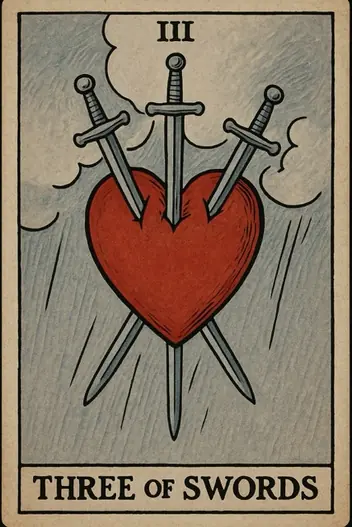
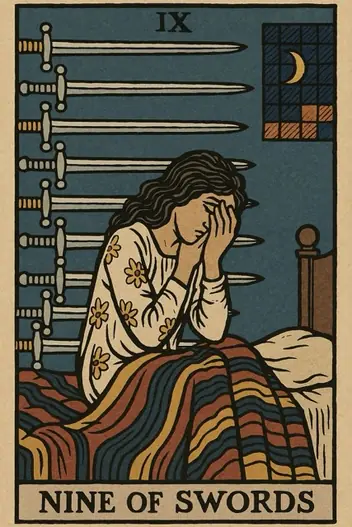
The intersection of the Three of Swords and Nine of Swords represents a psychologically intense convergence of emotional pain and anxious rumination. Where the Three of Swords signifies a sharp, piercing wound—often from betrayal, loss, or a painful truth—the Nine of Swords amplifies this into a full-blown cognitive crisis of worry, guilt, and sleepless nights. Together, they depict a mind trapped in a feedback loop: a real-world hurt triggers a spiral of catastrophic thinking.
From a pragmatic Jungian perspective, this pairing often signals that the Shadow is demanding integration. The pain you feel is not random; it is a symptom of a neglected inner truth or a repressed emotional pattern. The goal is not to numb the pain, but to decode its message. The swords, after all, are instruments of the mind—they cut to reveal, not just to wound. This combination asks you to move from being a victim of your thoughts to an observer of them.
Three of Swords and Nine of Swords Together: Meaning
When the Three of Swords and Nine of Swords appear together, the core dynamic is emotional pain multiplied by mental distortion. The Three of Swords provides the objective event—a breakup, a harsh critique, a financial loss. The Nine of Swords then takes that event and runs it through a filter of catastrophic thinking and self-blame. The result is a state where the actual problem is often smaller than the psychological reaction to it.
The psychological state here is one of acute distress and hyper-vigilance. The seeker may feel trapped in a narrative of failure, betrayal, or inadequacy. Sleep is disrupted, concentration is poor, and the mind replays the painful scene on a loop. From a cognitive-behavioral standpoint, this is a classic case of cognitive distortion: specifically, "mental filtering" (focusing only on the negative) and "personalization" (blaming yourself for events outside your control).
The strategic insight is that this pain is a call to action, not a verdict. The combination signals that you must stop trying to "think your way out" of the pain and instead take concrete, boundary-setting actions. The Three of Swords demands you cut ties with a toxic pattern, while the Nine of Swords demands you stop feeding it with anxious energy. Together, they advise: acknowledge the wound, but refuse to let it define your identity.
Three of Swords and Nine of Swords as Feelings
If you are single:
This pairing warns against projecting your past wounds onto a new connection. Your fear of betrayal may cause you to misinterpret neutral actions as hostile. Take a step back and objectively assess whether the pain is coming from the present situation or an unresolved past.
If you are in a relationship:
Open, direct communication is non-negotiable. The Nine of Swords anxiety here often stems from unspoken fears or assumptions. You must address the "elephant in the room" before it poisons your bond.
In relationships, this combination is a red flag for emotional exhaustion. The Three of Swords indicates a specific wound—perhaps infidelity, a broken promise, or a harsh truth that was finally spoken. The Nine of Swords then adds a layer of guilt, shame, or obsessive worry about the relationship's future. The danger is that both partners become trapped in a cycle of blame and defensiveness.
Key relationship advice:
Stop trying to "fix" the pain through more thinking. Instead, establish a clear, time-bound conversation about the issue. Use "I" statements to express your feelings without accusation. The goal is not to eliminate all discomfort, but to create a safe container for truth-telling. If the relationship is to survive, it must move from silent suffering to structured repair work. If it's ending, this combination says the pain of staying is worse than the pain of leaving.
Your pair is already on the table. Ask your question and draw the clarifying card
or simply focus on it
Three of Swords and Nine of Swords for Career and Money
Strategic Opportunities:
Use this pain to identify what you truly value. A job loss or professional critique (Three of Swords) can clarify your real priorities. The anxiety (Nine of Swords) is a signal to pivot, not to quit.
Strategic Opportunities:
Audit your professional boundaries. This combination often appears when you've been overextending yourself, taking on others' emotional labor, or ignoring red flags in a business partnership.
Calculated Risks:
Avoid making major financial decisions under duress. The Nine of Swords' anxiety clouds judgment. Delay any signing, investing, or quitting until you have had 48 hours of clear-headed analysis.
In a career context, this pairing often signals a crisis of confidence or a "failure" that feels catastrophic. You may have received negative feedback, been passed over for a promotion, or experienced a professional betrayal. The Nine of Swords turns this into a narrative of incompetence or impending ruin.
Important financial warning:
Do not let shame drive your spending. The Nine of Swords often leads to "retail therapy" or impulsive financial moves to regain a sense of control. Instead, create a concrete action plan to address the professional wound: update your resume, schedule a feedback session, or explore a new skill. The antidote to anxiety is agency. Break the problem down into small, manageable steps and execute them one at a time.
Ask your specific question
Don't rely on generic meanings. Get a customized reading tailored specifically to your energies.
When Three of Swords and Nine of Swords Signal Trouble
The shadow manifestation of this combination is chronic rumination and learned helplessness. The seeker becomes so identified with the pain that they cannot see a way out. They may develop a victim identity, using the past wound as an excuse to avoid risk or responsibility. The cognitive bias here is emotional reasoning: "I feel hopeless, therefore my situation is hopeless."
Another pitfall is projection of inner pain onto others. You may lash out at loved ones or colleagues, blaming them for your internal state. This is a defense mechanism to avoid facing the true source of the pain: your own unprocessed emotions. The danger is that this behavior creates new wounds, reinforcing the cycle.
Self-sabotage is also a high risk. The seeker may unconsciously create situations that confirm their worst fears—e.g., picking a fight to "prove" the relationship is doomed, or making a careless mistake to "validate" their professional inadequacy. The task is to recognize this pattern and break it with conscious action.
Three of Swords and Nine of Swords Reversed Meaning
When cards appear in a reversed position, the dynamic shifts from active suffering to suppression or denial.
Three of Swords Reversed:
Acute pain is denied or blocked. The person does not allow themselves to grieve, leading to emotional numbness and psychosomatic issues. Instead of feeling the blow, they freeze it. Warning: this is not strength, but a postponement. Unexperienced pain will return at the most inopportune moment as a flash of anger or illness. Advice: schedule a "time for grief" — 15 minutes a day when you consciously allow yourself to feel.
Nine of Swords Reversed:
Anxiety sinks into the subconscious and manifests as passive aggression, procrastination, and sabotage. Instead of worrying openly, the person "forgets" deadlines, is late, or makes "accidental" mistakes. This is a form of resistance. Advice: keep a "disagreeable tasks" journal. Write down what you are avoiding, and do it first thing in the morning.
BOTH Reversed:
Complete imbalance — emotional stupor. The person is in a state of apathy, where there is neither pain nor anxiety, but also no will to act. This is a dangerous zone of a depressive episode. A logical method of correction: forced activation. Do not wait for motivation — start with micro-actions: 5 minutes of physical activity, one short business email, one minute of conscious breathing. The way out of a stupor lies only through action, not through waiting.
Three of Swords and Nine of Swords: The Combined Message
Constructive use of this pair's energy requires radical acceptance followed by action. The Three of Swords tells you: "Yes, this happened. It hurts. It is a fact." Your task is to accept this fact without dramatizing it. The Nine of Swords says: "I am afraid this will happen again." Your task is to transform this fear into a plan of action.
Strategic advice: use the method of "Paradoxical Intention." Instead of fighting anxiety, deliberately intensify it in a controlled environment. Tell yourself: "Alright, I am going to be anxious now. I will sit down and imagine the worst-case scenario for 10 minutes. I will write it down in detail." After that, burn or tear up that sheet of paper. This ritual shifts anxiety from a passive background state into an active, time-limited action. You show your brain that you are the one managing fear, not the other way around.
The second step is focusing on specific, measurable actions. If you fear failure at work, make a list of 3 things you can do today to reduce that risk. If you fear rejection, write one message or make one phone call. The energy of the Three of Swords is the energy of cutting. Use it to sever what is superfluous: old connections, useless habits, irrational beliefs. The energy of the Nine of Swords is the energy of vigilance. Use it to create a system of protection and early warning, not a cage for yourself.
Key takeaway: this combination is not about how to stop feeling pain. It is about how to stop being a slave to that pain. Your strength lies not in denying suffering, but in the choice: what will you allow to define your life—the past blow or the future action.
Where to Go From Here
The core message of Three of Swords and Nine of Swords is this: pain is a teacher, not a jailer. Your mind will try to trap you in a loop of worry and regret, but the path forward lies in grounded action and honest self-assessment. Acknowledge the wound, but do not build your identity around it. The swords are tools for clarity—use them to cut away what no longer serves you, not to stab yourself repeatedly.
Your unique situation holds the key to unlocking this combination's full meaning. While this article explains the general archetype, the real power comes when you apply it to your specific question. The Fortune Cards app lets you do exactly that. Use it on the web or download it to get a deep, personalized interpretation of this exact combination for your life right now. Stop guessing—get the clarity you need to act.
Interpretation by the Fortune Cards editorial team, based on the Rider–Waite tradition and Jungian archetypes. About our methodology · Updated: 2026-08-26
Other Combinations with Three of Swords
Other Combinations with Nine of Swords
Explore Individual Card Meanings
Table of Contents
- Three of Swords and Nine of Swords Together: Meaning
- Three of Swords and Nine of Swords as Feelings
- Three of Swords and Nine of Swords for Career and Money
- When Three of Swords and Nine of Swords Signal Trouble
- Three of Swords and Nine of Swords Reversed Meaning
- Three of Swords and Nine of Swords: The Combined Message
- Where to Go From Here
Ready to find answers to your questions?
Start your first reading now and look at your situation with fresh clarity. The cards are ready to reveal deeper meaning.